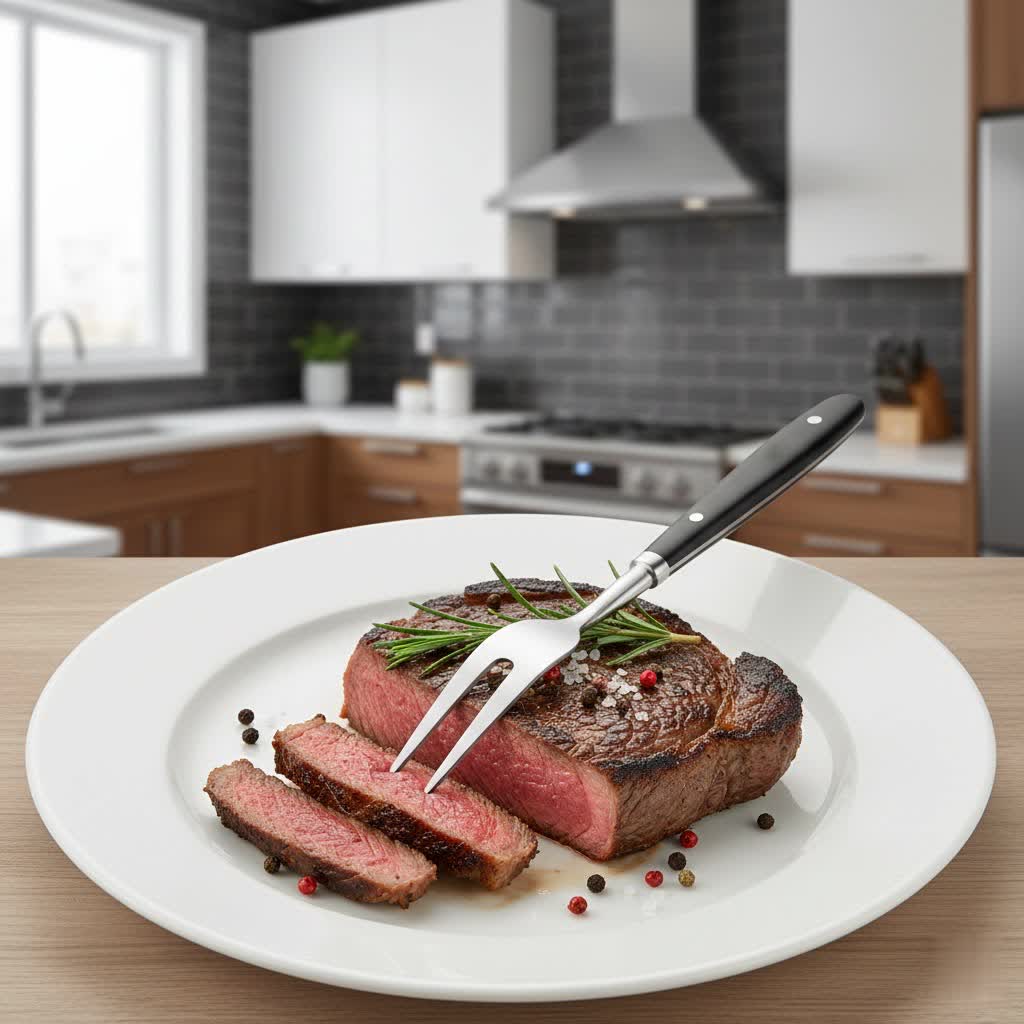
Watching your child navigate a delicious steak can be a mix of pride and worry. You want them to enjoy their meal and develop essential dining skills, but traditional cutlery can be daunting, even hazardous, for little hands still mastering coordination. The good news is, specialized children’s steak forks exist to transform this challenge into a confident step towards culinary independence. These thoughtfully designed utensils provide the stability and safety necessary for young learners, making steak night a joy for the whole family.
What is a Steak Fork and Why Do Kids Need a Specialized One?
At its core, a steak fork is an eating utensil designed to securely hold meat, typically steak, allowing for easy cutting and consumption. For adults, this means sharp, often slightly curved tines engineered for a firm grip. However, for children learning to cut, these adult features can be problematic. Standard forks often have slender, pointed tines that can be unsafe or difficult for small mouths and developing fine motor skills.
A specialized children’s steak fork, while still performing the fundamental task of holding food, prioritizes safety and ergonomics. Unlike a regular dinner fork, a child-friendly version is specifically crafted to prevent accidents and aid in the complex task of independent eating, especially when paired with a child-safe knife. These forks are essential not just for safety, but for empowering children to participate fully in family meals, building their confidence and refining their dexterity. They bridge the gap between baby-led weaning utensils and full-sized adult cutlery, offering a crucial tool in a child’s developmental journey at the dinner table.
Key Features of the Best Steak Forks for Kids
Choosing the right steak fork for a child involves looking beyond miniature adult versions. The best options incorporate specific features that cater to a child’s unique needs, ensuring safety, comfort, and effectiveness as they learn to manage tougher foods like steak.
Safety-First Design
The paramount concern for any children’s utensil is safety. For steak forks, this translates into thoughtfully designed tines and edges. Look for forks with:
- Blunt Tines: Unlike the sharp points of adult steak forks, child-safe versions feature blunted or rounded tines. This significantly reduces the risk of accidental pokes or injuries to the mouth, gums, or face while still allowing the child to spear food effectively.
- Rounded Edges: The entire fork, not just the tines, should have smooth, rounded edges to prevent any nicks or scrapes during use. This attention to detail ensures a comfortable and worry-free dining experience.
|
Our Picks for the Best Steak fork in 2026
As an Amazon Associate I earn from qualifying purchases.
|
||
| Num | Product | Action |
|---|---|---|
| 1 | 2 Pcs Carving Fork for Meat – 12 Inch Stainless Steel Meat Forks for Kitchen, Heat-Resistant Non-Slip Handles – Two-Prong Straight & Curved BBQ Fork for Slicing, Grilling & Serving |

|
| 2 | OXO Good Grips Stainless Steel Carving Fork, One size |
|
| 3 | Meat Cooking Fork Stainless Steel Fork - 10.8" Metal Serving Forks for Meat Carving Heavy Duty Two Prong Meat Fork for Grill Lifting Barbecue Forks |
|
| 4 | SUNRISE Stainless Steel Meat Fork 10.5" Fork |
|
| 5 | Chef Craft Select Meat Cooking Fork, 13 inch, Stainless Steel |
|
| 6 | Anolon SureGrip Stainless Steel Meat Fork/Kitchen Tool, 13.25 Inch, Gray,46288 |
|
| 7 | 2 Pcs Carving Fork for Meat 11,8 inch - Stainless Steel Meat Fork with Heat-Resistant Handle for Grilling, Cooking, Serving - Straight and Curved Carving Utensils with Classic Two-Prong BBQ Design |
|
| 8 | Ponpon 2Pcs Meat Forks Stainless Steel Carving Fork with Wooden Handle Barbecue Fork for Cooking Kitchen (2) |
|
| 9 | 2 Pieces Meat Fork Stainless Steel Carving Fork with Wood Handle Cooking BBQ Grill Steak Tool for Kitchen Barbecue Serving Cooking Grilling Roasting 10.5 Inches, Round Handle |
|
| 10 | Kilajojo Chef Pro Stainless Steel Carving Fork 12 Inch |
|
“When selecting cutlery for children, blunt tines and rounded edges are non-negotiable. It’s about minimizing risk while maximizing functionality, allowing children to practice without fear.” – Maria Chen, Pediatric Occupational Therapist
Ergonomic Handles for Small Hands
Children’s hands are different from adult hands, requiring handles designed for their smaller size and developing grip strength. Ergonomic features are vital for comfort and control.
- Optimal Size and Weight: Forks should be appropriately sized – not too long or too short – and lightweight enough for a child to hold and maneuver without strain. A heavy fork can be cumbersome, leading to fatigue or dropped utensils.
- Non-Slip Grip: Many excellent children’s forks feature handles made from silicone or other non-slip materials. This enhanced grip prevents the fork from slipping, especially when hands might be wet or greasy from food, providing greater control for cutting and spearing.
- Contoured Shapes: Some handles are designed with specific contours or textures that fit naturally into a child’s palm, promoting proper grasp and making the utensil easier to hold steady while cutting meat with a knife.
Durable and Safe Materials
The materials used in children’s cutlery must be both safe for consumption and robust enough to withstand frequent use and cleaning.
- Food-Grade Stainless Steel: High-quality stainless steel, such as 18/8 or 18/10 grades, is the gold standard. It is stable, non-porous, and non-toxic, resisting rust and corrosion. It does not react with food or leach harmful substances, making it exceptionally safe and durable.
- BPA-Free Components: If the fork incorporates plastic or silicone elements (e.g., in the handle), ensure these are certified BPA-free and food-grade to avoid exposure to potentially harmful chemicals.
- Easy to Clean: Forks should be dishwasher-safe to simplify cleanup for parents, ensuring hygiene without extra effort. Materials that are non-porous and resist food stains are ideal.
Effective Meat Gripping
Even with safety in mind, a steak fork for kids must still effectively hold meat in place while a child cuts.
- Appropriate Tine Spacing: Tines that are too wide apart might not grip thinner cuts of meat, while tines too close together might struggle with thicker pieces. The ideal spacing allows for secure piercing without excessive force.
- Sturdy Construction: The fork head and tines should be robust enough not to bend or flex when piercing meat, providing the necessary stability for the accompanying knife to do its work.
Popular Types and Brands of Children’s Cutlery Sets
Many brands offer comprehensive cutlery sets that include a child-friendly fork, often alongside a spoon and a safe knife. These sets are designed to provide a cohesive and age-appropriate dining experience.
- Stainless Steel with Silicone Handles: A popular choice, these sets combine the durability and hygiene of stainless steel tines with ergonomic, soft-touch silicone handles. The silicone often comes in bright, appealing colors or features textured grips, making them easy for small hands to hold and less likely to slip. Brands like Elk and Friends offer such combinations, with designs specifically for older kids (4 years+) featuring rounded fork tips and easy-grip handles.
- All Stainless Steel Sets: For a more “grown-up” feel, some brands offer full stainless steel cutlery sets scaled down for children. These often feature simple, elegant designs with polished finishes, encouraging children to emulate adult dining. The focus here is on thoughtful shaping of the metal itself to create a safe, blunt fork head and a handle that is easy for small hands to grasp, such as ergonomic toddler cutlery sets that avoid bright colors for a more sophisticated aesthetic.
- Weighted Cutlery: Less common for general steak forks but available for children with specific developmental needs, weighted cutlery can provide proprioceptive feedback, aiding children who struggle with motor control and stability. While not always marketed as “steak forks,” some may have appropriate tine designs.
- Specialized Training Sets: Some sets are explicitly designed as “training” cutlery, focusing on the development of self-feeding skills. These often include features like short, stout handles and blunted tines to make the learning process safe and effective. Walmart, for example, carries stainless steel training fork and spoon sets with ergonomic non-slip round short handles and blunt safety tines.
Many brands prioritize food-grade 304 stainless steel for their child cutlery, ensuring resistance to rust, ease of cleaning, and overall safety. These sets are typically dishwasher-safe, offering convenience for busy parents.
How to Choose the Right Steak Fork for Your Child
Selecting the ideal steak fork for your child means considering their individual development, your family’s lifestyle, and the specific characteristics of the utensil.
Consider Your Child’s Age and Developmental Stage
A toddler just starting solid foods will need a different fork than a seven-year-old mastering independent cutting.
- Younger Children (1-3 years): Focus on very blunt, rounded tines and short, chunky, easy-to-grip handles. The priority is safety and basic food manipulation.
- Older Children (4+ years): As fine motor skills improve, you can introduce forks with slightly longer handles and more defined (but still blunt) tines that can pierce and hold meat more effectively for cutting. Consider how well they can coordinate a fork with a child-safe knife.
Prioritize Safety Features
Always put safety first. Double-check for:
- Blunt Tines: Ensure there are no sharp points that could cause injury.
- Smooth Edges: Run your finger along the entire utensil to confirm there are no rough or sharp edges.
- Child-Safe Materials: Verify that all materials are food-grade and free from harmful chemicals like BPA.
Evaluate Handle Comfort and Grip
A comfortable and secure grip is critical for a child’s success and confidence.
- Size and Shape: The handle should fit comfortably in your child’s hand. Look for ergonomic designs that promote a natural grasp.
- Non-Slip Properties: Silicone or textured handles can make a significant difference in preventing slips, especially during the concentrated effort of holding meat while cutting.
Material Durability and Ease of Cleaning
Practicality for parents is also key.
- Stainless Steel: Opt for high-quality stainless steel for longevity and hygiene. It stands up to repeated use and washing.
- Dishwasher Safe: To save time and ensure thorough cleaning, choose forks that are safe for the dishwasher.
Read Reviews and Seek Recommendations
Before making a purchase, consult other parents or product reviews.
- Parental Feedback: Reviews can offer valuable insights into how children actually interact with the forks, highlighting practical benefits or potential drawbacks.
- Expert Opinions: While direct expert reviews of specific steak forks for kids might be limited, general advice from pediatric occupational therapists on children’s cutlery can guide your decision. They often emphasize proper grip, weight, and safety.
Tips for Introducing Steak Forks and Encouraging Independent Eating
Introducing new utensils and encouraging independent eating requires patience, positive reinforcement, and a supportive environment.
- Start with Softer Foods: Begin by letting your child practice with easier-to-manage foods before moving on to steak. Think cooked vegetables, soft fruits, or chicken pieces. This builds confidence in using the fork.
- Demonstrate Proper Use: Show your child how to spear the meat with the fork and hold it steady while using a child-safe knife to cut. Model the actions slowly and clearly.
- Supervision is Key: Always supervise young children while they are eating, especially when they are learning to use new utensils, to ensure their safety and offer assistance if needed.
- Make Mealtime Fun: Create a positive atmosphere around eating. Avoid pressuring your child, and celebrate their efforts and successes, no matter how small. A positive experience encourages continued learning.
- Teach Cleaning and Care: Involve older children in the process of cleaning their forks. This teaches responsibility and reinforces hygiene habits. Most child-safe cutlery is dishwasher-friendly, simplifying this step.
By making the process enjoyable and providing the right tools, you can help your child master the art of eating steak with confidence and independence.
Conclusion
Choosing the best steak fork for your child learning to cut meat is an investment in their development and a step towards fostering greater independence at the dinner table. Prioritizing safety through blunt tines and rounded edges, combined with ergonomic handles designed for small hands, ensures a comfortable and secure grip. High-quality, food-grade stainless steel construction guarantees durability and ease of cleaning, making mealtime smoother for everyone. With the right steak fork, your child can confidently spear and stabilize their meal, transforming the challenge of cutting meat into an enjoyable and empowering experience.
Are you ready to elevate your child’s dining experience and watch them gain new skills with confidence?
Frequently Asked Questions
What age is appropriate for a child to start using a steak fork?
Children can typically start using a child-safe steak fork around 3-4 years old, or when they show interest in using adult utensils and have developed sufficient fine motor skills to hold and manipulate them. This also depends on their readiness to learn how to cut food with a child-safe knife.
Are children’s steak forks truly safe?
Yes, child-safe steak forks are designed with features like blunt, rounded tines and smooth edges specifically to prevent injuries to a child’s mouth and hands. They prioritize safety without sacrificing the ability to effectively hold food.
Can a child’s steak fork also be used for other foods?
Absolutely! While designed with steak in mind, these forks are versatile enough to be used for a wide range of solid foods, including chicken, fish, vegetables, and fruits, helping children practice their spearing and cutting skills across various meals.
How do I teach my child to use a steak fork and knife together?
Start by demonstrating slowly how to hold the fork to secure the meat, then use a child-safe knife to make small cuts. Practice with softer foods first, offer gentle guidance, and always supervise. Positive encouragement is key to building their confidence.
What materials are best for children’s steak forks?
Food-grade stainless steel (18/8 or 18/10) is highly recommended for its durability, hygiene, and non-toxic properties. Handles are often made from BPA-free silicone for an ergonomic, non-slip grip suitable for small hands.
How do I clean and maintain children’s steak forks?
Most high-quality children’s steak forks are dishwasher-safe. For hand washing, use warm soapy water and dry them thoroughly to prevent water spots or mineral buildup. Avoid abrasive scrubbers to protect the finish.